

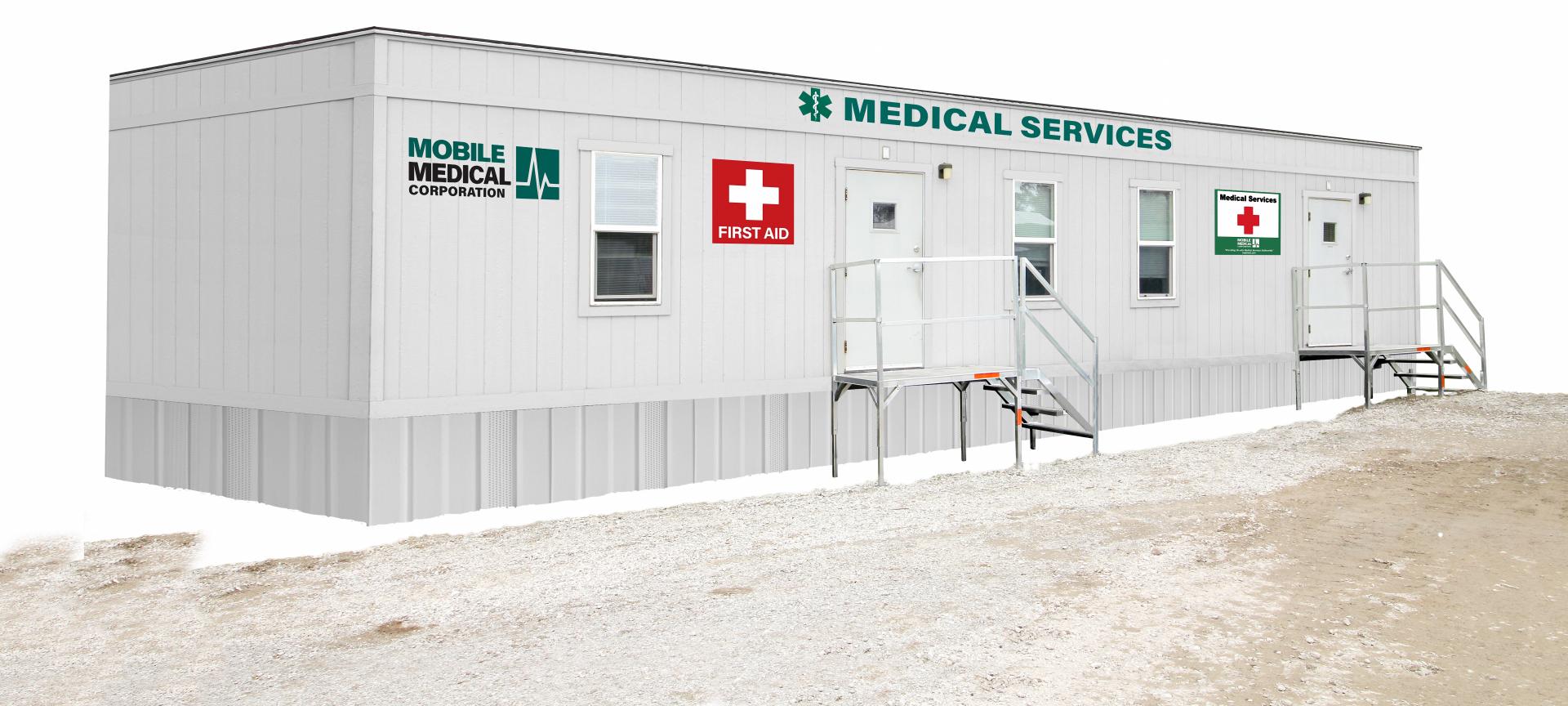
On-site medical services put a clinician at the jobsite to assess and treat injuries the moment they happen. For workers' compensation carriers or brokers, that means fewer claims opened for minor injuries, faster return to work, and one consistent injury process across every contractor on the project.
The insurance side of the jobsite
Insurers price jobsite injuries, reserve for them, and pay for them. But no one from the carrier is there when a worker cuts a hand on sheet metal mid-shift. By the time the first report reaches a desk, the decisions that shape the claim have already been made by whoever happened to be nearby.
The first hour after an injury shapes the claim
First aid or medical treatment
One of the Occupational Safety and Health Administration's (OSHA) tests for a recordable injury is whether it needs medical treatment beyond first aid. OSHA's first aid list is closed: 14 treatments, including cleaning a wound, applying bandages, hot or cold therapy, and non-prescription medication at non-prescription strength. If a treatment isn't on the list, it isn't first aid. Our guide to what counts as an OSHA recordable covers the rest of the rules.
Without a clinician on site, the default for a hurt worker is an emergency room/urgent care visit. A prescription or a work restriction is a common outcome there, and either one turns a minor injury into a recordable and a claim.
With a clinician on site, the injury is assessed first, then treated at the level it needs. At Mobile Medical Corporation (MMC), our on-site medical clinics treat minor injuries before they meet the recordable threshold. That matters beyond the OSHA log, because each recordable can affect insurance rates, contractor prequalification, and bid eligibility.
Keep in mind that is not the same as holding back care. Whenever an injury calls for more than first aid, the clinician refers the worker to outside care, documents the referral, and follows the case. The goal here is the right level of care, not fewer reports.
Earlier reports, smaller claims
A National Council on Compensation Insurance (NCCI) study reported by Business Insurance in 2015 found that delayed injury reporting can raise workers' comp claim costs by up to 51%. On-site, the injury is seen, documented, and reported in the same shift.
For scale, the National Safety Council (NSC) puts "the average cost for all claims combined" at $50,076 for accidents that occurred in 2023 and 2024.
What each insurance partner gains
Each partner sees the same on-site work from a different desk.
| What happens on site | What the insurance partner sees |
|---|---|
| A clinician assesses the injury right away | Minor injuries handled as first aid; serious ones referred out without delay |
| The injury is documented the same shift | A timely first report with clinical detail |
| The clinician coordinates modified duty | Fewer lost days and more medical-only claims |
| Every contractor uses one clinic and one process | Consistent injury records across the whole project |
Wrap-up sponsors (OCIP and CCIP)
On an owner-controlled insurance program (OCIP) or contractor-controlled insurance program (CCIP), one program covers workers' comp for every enrolled contractor, so every trade's injuries land on the sponsor's loss record. Without a clinic, each subcontractor sends injured workers to its own provider, with different paperwork and timing.
A clinic, on the other hand, gives the whole project one injury process. Our on-site first aid stations list owner- and contractor-controlled insurance program projects first among their uses. A standard station is an 8' x 32' mobile unit with one or more medical professionals, and it works alongside our other worksite health services.
Carriers and loss control teams
Carriers gain in a few ways: fewer claims, and more of the remaining claims staying medical-only. Experience rating rewards both. As Protective Insurance's experience rating explainer notes, in most states a medical-only claim (no lost time from work) counts 70% less in the mod calculation, and how often losses happen tends to move the mod more than the size of any one loss.
What keeps a claim medical-only is a fast return to work or modified duty. A clinician who knows the site in addition to the job can coordinate that in the same shift.
Brokers and risk consultants
On-site medical is a recommendation a broker can make before a project starts, and the result shows up at renewal. Fewer claims (and more claims that stay medical-only) support a lower experience modification rate (EMR) over time. No one can promise a premium figure, but you can bring a cleaner loss history to renewal.
Claims teams and third-party administrators (TPAs)
Our case management team proactively manages all active claims and serves as liaison between medical providers, rehabilitation providers, and injured workers. Clinicians track follow-up appointments, coordinating with adjusters on return to work. The adjuster gets one clinical contact on site who knows the worker, the job, and the work status simultaneously.
Planning a wrap-up project? Talk with MMC.
What to look for in an on-site medical partner
Whether you recommend a provider or require one in a wrap-up program, start with the basics. At a minimum, the right partner provides:
- Clinical staff
- A medical director
- An on-site management team with corporate support
- Customized wellness and mental health initiatives
- Electronic medical records and reporting
- Medical/administrative supplies and equipment
- Cybersecurity safeguards
- Professional liability insurance
Insurance partners should add three questions of their own:
- What is the written protocol for referring a worker off-site?
- What reports reach the carrier or TPA, and how often?
- Who is the single point of contact for an adjuster?
For staffing, pricing, and mobilization, our guide on how to choose an on-site medical provider covers what to ask before you sign.
Lowering exposure before an injury happens
Prevention shows up in the loss history, too. An on-site partner will take on the work that keeps injury and illness claims from starting:
- Drug and alcohol testing. MMC is an industry-leading third-party administrator (TPA), and our drug testing administration manages workplace testing for employers.
- Physicals. Pre-employment and fit-for-duty physicals (offered through our Bethel Park, PA office) confirm a worker is fit for the job before starting or returning.
- Medical surveillance. Our medical surveillance programs, including hearing conservation and respiratory protection, catch exposure problems early.
- Stretch-and-flex and wellness. Daily stretch-and-flex and wellness programs get crews moving before the shift and target the strains and sprains common on construction sites.
Where MMC fits
MMC builds and staffs on-site clinics for construction and industrial projects, with offices in Pittsburgh, Paramus, Cleveland, and Kansas City. Clinics are staffed for the hours the project specifies, including nights and weekends, and telemedicine covers off-hours or crews too small for a full-time clinician. Case management follows referrals through return to work, with Rapid Response teams covering short-notice projects. On multi-year data center builds, our Data Center Healthcare Specialists work inside the site safety team.
Of course, a clinic only helps if workers use it. In MMC's own survey of 331 patients across 34 projects (March 2023 to September 2026), patients rated their care 9.8 out of 10, and 97% recommend on-site medical services for future jobs.
"It provides immediate care for minor injuries and ensures rapid response to emergencies, enhancing our safety protocols significantly." - Senior Safety Manager, Caddell Construction
Put a clinician in the first hour with Mobile Medical Corporation
Insurance partners can't be on the jobsite when someone gets hurt, but a clinician can. That first hour decides whether a claim opens, how large it grows, and how well it is documented.
Don't leave your next project's on-site medical care to chance. Our team is ready to walk you through a custom solution for whatever your industry holds.