
From construction sites to manufacturing floors, on-site medical care has undergone significant changes over the past decade. What used to mean a CPR-certified staff member has evolved into dedicated medical teams, mobile clinics, and even full-scale wellness programs. As regulations tighten and companies place greater emphasis on risk management, having the right medical professional present is paramount.
For many organizations, that decision starts with a key question: What's the difference between an emergency medical technician (EMT) and a paramedic? The titles are often used interchangeably, but the required training and ideal use cases can be very different. Choosing the wrong level of provider could mean overspending on capabilities you don't need or, more critically, being underprepared when an emergency does happen.
This guide is designed to help businesses, project managers, safety leaders, and event organizers choose the optimal medical staffing for their specific environment. By the end, you'll have a practical way to evaluate your project's needs and confidently determine whether an EMT, a paramedic, or a blended approach is the best fit for your site.
Assessing Your Project's Medical Needs
Before you can settle on EMT vs. paramedic services, you need a clear picture of what your project actually demands.
Critical Questions to Answer
1. What is the primary risk profile of your workplace?
- Heavy machinery, working at heights, confined spaces
- Chemical exposure, inhalation risks, heat/cold stress
- Crowd density, alcohol use, security risks (for events)
2. What types of medical situations are most likely to occur?
- Historical incident data
- Industry norms
- Environmental factors (heat, cold, altitude, allergens)
3. What is your workforce size and composition?
- Total headcount on site (including contractors and visitors)
- Demographics (age, pre-existing conditions where known, physical demands)
- Roles with higher exposure to risk
4. What are your shift patterns and hours of operation?
- Is your project 24/7, or limited to standard business hours?
- Are there high-risk tasks scheduled at night or during reduced staffing?
- Do you have overlapping shifts or large shift changes?
5. How remote is your location from emergency medical services (EMS)?
- Distance and drive time to the nearest hospital
- Average EMS response times for your area
- Reliability of local infrastructure
6. What is your project timeline?
- Total duration, whether that's days, months, or a multi-year project
- Phases of work (high-risk construction phase vs. lower-risk operations phase)
7. What additional services beyond emergency response do you need?
- Return-to-work and post-incident assessments.
- Health education, hydration/heat-stress monitoring, wellness checks
8. What is your allocated budget for medical services?
- Total budget for the project's medical coverage
- Flexibility to adjust coverage by phase, shift, or risk level
Factors That Influence EMT Vs. Paramedic Staffing Decisions
Once you've worked through these questions, the next step is to translate your answers into a concrete staffing plan. Now you can make decisions about the number and level of on-site medical professionals you'll need.
Required Scope of Medical Services
If your site requires only basic first aid and basic life support (BLS), EMTs may be fully sufficient to meet your needs. When there is a realistic possibility of more complex emergencies (i.e., advanced airway management, IV therapy, cardiac monitoring, or the administration of emergency medications), you should plan to include paramedics in your staffing mix.
Level of Medical Expertise Needed
The level of expertise required for paramedic vs. EMT staff is driven by both your risk profile and your access to outside help. In low-risk environments with quick access to 911 services and nearby hospitals, EMTs are often appropriate as the primary on-site resource. In moderate- to high-risk operations, a blended model that combines EMTs with at least one paramedic offers both capacity as well as depth of care.
For job sites where the consequences of a medical event are severe, paramedic-led teams are the recommended standard.
Project Location and Local Clinical Availability
Your location and local healthcare infrastructure heavily influence staffing decisions. Urban projects with short transport times and robust EMS response can often rely on EMTs to stabilize patients.
In contrast, rural and remote projects (or those in areas with limited EMS resources) may need on-site paramedics who can deliver advanced interventions, manage patients for extended periods, and make higher-level clinical decisions when outside support is delayed or unavailable.
Project Manpower/Workforce Size
The size of your workforce directly affects how many providers and what mix of skill levels you need. On smaller sites with roughly 50–100 people, one EMT or one paramedic may be sufficient, depending on the specific risk profile.
As your headcount grows, relying on a single provider becomes unsafe. Larger operations typically benefit from multiple EMTs for broad coverage, along with at least one paramedic during peak activity periods to handle more serious incidents and provide clinical oversight.
Project Duration
Short-term projects may be best served by scalable, targeted coverage, often centered around EMTs, with paramedic support brought in during the highest-risk phases.
Long-term or multi-year projects can justify more comprehensive medical setups. These might include dedicated medical rooms or clinics, expanded equipment, and a layered team that includes EMTs, paramedics, and potentially other healthcare professionals such as occupational health nurses.
Shift Requirements and Hours
Your shift patterns and operating hours shape how coverage must be structured. A single daytime shift with predictable work tends to allow a simpler staffing model, sometimes with just one level of provider.
Multi-shift operations, night work, or 24/7 sites require more careful planning. In these settings, you may schedule EMTs to provide baseline coverage across all shifts and ensure paramedics are present during higher-risk tasks.
Budget Parameters
Finally, your budget defines what is realistically achievable. With tighter financial constraints, you may prioritize broad EMT coverage and use paramedics more selectively, targeting specific time windows, project phases, or activities that carry the highest risk.
When budgets are more flexible, you can consider paramedic-led services, wellness and occupational health programs, and layered staffing that combines multiple provider levels for stronger coverage.
Medical Professional Categories

When debating EMT vs. paramedic on-site medical staff, it helps to understand how each role is trained, what they can legally do, and where they tend to excel.
EMT
EMTs are entry-level licensed providers focused on emergency care and stabilization. Key training and skills include:
- ~12 months of training
- Patient assessment and basic airway management
- BLS and CPR
- Bleeding control, shock management, and fracture immobilization
|
Strengths |
Limitations |
Best Fit? |
|
✅Cost-effective basic first aid and emergency response ✅Common workplace injuries and sudden illnesses ✅Environments with nearby hospitals or EMS ✅Long/irregular shifts |
⚠️Narrow scope for follow-up care/case management ⚠️Inability to perform advanced interventions or advanced life support (ALS) ⚠️Restricted medication administration ⚠️Less suitable as a resource for complex wellness programs |
🤝Primary need is basic first aid and emergency response 🤝Risk profile is low to moderate 🤝Hospital access is available 🤝Budget is a major driver |
Advanced EMT
Advanced EMTs have additional training that expands what they can do, particularly around fluids and medications. They typically add:
- 6–12 months of training beyond EMT-Basic (advanced certificate)
- IV line initiation (where permitted)
- Expanded medication administration
- More advanced assessment and monitoring skills
|
Strengths |
Limitations |
Best Fit? |
|
✅Middle ground between EMTs and paramedics ✅Increase on-site capability without the full cost and training of a paramedic ✅Useful where occasionally higher-acuity cases are possible, but full ALS isn't required every day |
⚠️Narrower scope than a paramedic ⚠️Restricted medication formulary ⚠️Scope is highly jurisdiction-dependent |
🤝Moderate-risk sites needing more than EMT but not full ALS 🤝Occasional moderate-acuity cases, with reasonable EMS access 🤝Budgets that can't justify full-time paramedics |
Paramedic
Paramedics complete significantly more education, leading to an associate degree or advanced certificate geared toward ALS. Core preparation includes:
- 2–3 years of training
- Advanced airway management and ventilation
- IV and other medication administration
- Cardiac monitoring
- Advanced trauma and medical assessment
- Interpretation of selected diagnostics within training
- Management of complex, high-acuity situations
|
Strengths |
Limitations |
Best Fit? |
|
✅Advanced emergency care and independent ALS management ✅Critical triage and complex injury/illness response ✅Rugged, industrial, or remote environments ✅Long shifts and variable conditions ✅ Advanced procedures (IV therapy, suturing where allowed) |
⚠️Focus on acute/emergency care rather than long-term case management ⚠️No authority to prescribe medications ⚠️Less emphasis on wellness/chronic disease |
🤝Environment is moderate to high risk 🤝ALS capabilities needed on site 🤝Access to hospitals is limited or delayed 🤝Focus is on emergency and acute injury care within a budget |
Licensed Practical Nurse (LPN)
LPNs are nursing professionals who typically complete diploma or certificate training. Their core skill set usually includes:
- 12–18 months of LPN training
- Basic nursing care and vital sign monitoring
- Routine patient assessment and treatment
- Medication administration within license limits
- Wound care and dressing changes
- Follow-up care and basic case management
- IV initiation in some jurisdictions, with extra training
|
Strengths |
Limitations |
Best Fit? |
|
✅Cost-effective nursing coverage ✅ Routine care, follow-up visits, light case management ✅Supporting wellness programs and health education ✅Broader routine-care scope than EMTs |
⚠️Narrower scope than paramedics for advanced procedures ⚠️State/provincial restrictions on IV therapy and more complex tasks ⚠️Need for supervision for complex or unstable cases |
🤝Need nursing-oriented care/wellness support on a budget 🤝Have appropriate clinical oversight available |
Registered Nurse (RN)
RNs complete several years of education (associate or bachelor's degree) and are trained for comprehensive nursing care and ongoing management. Typical capabilities include:
- 2–4 years of RN education
- Nursing care for diverse conditions
- Advanced assessment and monitoring
- Medication and injection administration
- IV initiation and infusion management
- Operation of advanced breathing devices
- Patient education, coaching, and health promotion
- Suturing in some jurisdictions with appropriate training
|
Strengths |
Limitations |
Best Fit? |
|
✅Case management and follow-up of injuries/illnesses ✅Leading wellness and occupational health programs ✅Managing chronic conditions ✅Handles most procedures that paramedics can |
⚠️Higher hourly rates than EMTs, Advanced EMTs, and many paramedics ⚠️Potentially less in rugged or heavy-industrial settings |
🤝Non-emergency and follow-up needs 🤝Strong wellness and case management capabilities 🤝Budget supports higher rates |
Nurse Practitioner (NP)
Nurse Practitioners are advanced practice nurses who first qualify as RNs and then complete graduate-level training (master's or doctoral). Their expanded scope includes:
- All RN competencies
- Medication prescribing authority (where allowed)
- Advanced diagnostic evaluation and treatment planning
- Ordering and interpreting a wide range of diagnostic tests
- High level of autonomous practice and decision-making
- Management of both acute and chronic conditions
|
Strengths |
Limitations |
Best Fit? |
|
✅Highest level of on-site care and clinical decision-making ✅Prescribing/adjusting medications ✅Leading occupational health and wellness programs ✅Reducing need for external referrals and off-site visits |
⚠️Highest hourly cost ⚠️Often more capability than needed for emergency-only models ⚠️Scope and independence vary by state |
🤝On-site prescribing, robust occupational health, chronic disease management 🤝High degree of autonomy (especially in remote locations) 🤝Large enough workforce or risk profile to justify investment |
Scope of Practice for EMT Vs. Paramedic Professionals
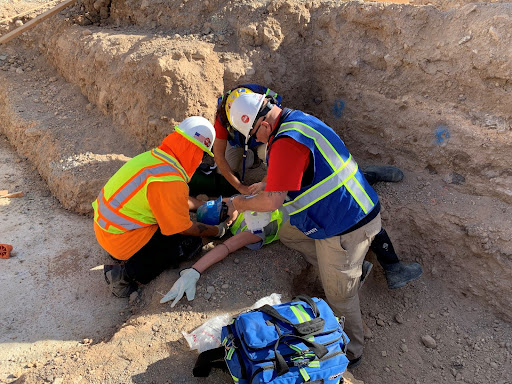
"Scope of practice" defines what a licensed medical professional is legally allowed to do: the procedures, actions, and decision-making authority that match their training. It is set by state licensing boards and regulatory bodies, based on formal education, clinical experience, and demonstrated competency. Scope can also vary significantly by location, meaning the same credential may be permitted to perform different tasks in different jurisdictions.
For on-site medical projects, the scope of practice matters because it ensures your clinicians are authorized to perform the interventions you expect from them, operating at the level your risk profile requires. In other words, your staffing decision isn't about titles or experience alone. Rather, it concerns whether each role's legal scope matches your anticipated needs.
|
Capability |
EMT |
Advanced EMT |
Paramedic |
LPN |
RN |
NP |
|
Can act as a first responder |
Yes |
Yes |
Yes |
Yes |
Yes |
Yes |
|
Assess and treat injuries |
Yes |
Yes |
Yes |
Yes |
Yes |
Yes |
|
Follow-up care/case management |
Limited |
Limited |
Yes |
Yes |
Yes |
Yes |
|
Suturing |
No |
No |
Yes* |
No* |
Yes* |
Yes |
|
Give injections |
No |
Limited* |
Yes |
Yes |
Yes |
Yes |
|
Prescribe medications |
No |
No |
No |
No |
No |
Yes* |
|
Use advanced breathing devices |
No |
No |
Yes |
Yes* |
Yes |
Yes |
|
Start IV lines |
No |
Yes* |
Yes |
No* |
Yes |
Yes |
|
Provide ALS |
No |
Limited* |
Yes |
No |
Yes* |
Yes* |
|
Interpret electrocardiograms (ECGs) |
No |
Limited* |
Yes |
No |
Yes |
Yes |
*State and training dependent
Cost Considerations
Different roles come with different hourly rates, startup costs, and long-term value. Looking only at the "cheapest rate" can be misleading if the scope of practice doesn't match your project.
Rate Structures
Hourly rates are driven by a combination of factors, including:
- Level of training for EMT vs. paramedic services
- Licensing and regulatory requirements
- Geographic location and local wage norms
- Local competition for talent
- Project duration and stability
- Individual clinician's experience and background
In general, more advanced training and a broader scope of practice correspond to higher hourly rates, but that doesn't automatically mean higher total cost if the role prevents avoidable incidents, transports, or downtime.
Project Duration
Short-term projects of less than 1 year often carry higher hourly rates because initial setup costs (think medical inventory, equipment, documentation, and protocol development) are concentrated into a brief period. Recruiting and onboarding expenses must be recovered quickly, and medical direction must still be established regardless of how long the project lasts.
In contrast, long-term projects of 2 years or more can typically support lower hourly rates. Setup and equipment costs are amortized over a longer timeline, while staffing stability reduces recurring recruitment expenses.
Building Your Staffing Model
Once you have a grasp on your project's scope of service, you'll need to determine how to staff: a single provider, a small team, or a layered mix of roles. Most on-site medical models fall into one of three categories.
Single Personnel Model
A single-clinician model can work well when the environment and expectations are relatively contained. It is most appropriate when you have a smaller workforce (typically under about 300 people on site), limited daily operating hours, and a clearly defined, focused set of medical needs. This approach is also common when the budget is tight, and you need to maximize value from one role.
In this model, choosing the right license is critical. You'll want to match the provider's scope of practice to the needs they will see most often, such as first aid, basic injury care, or wellness support, while still ensuring they can address your highest-risk foreseeable scenarios.
Because everything hinges on one person, it is also important to establish clear backup and escalation protocols. This includes how and when to activate EMS, who they consult for complex decisions, and how coverage is handled when they are off-site.
Multi-Personnel Model
A multi-clinician model becomes more necessary as complexity, volume, and expectations increase. It is a strong fit when you have a large workforce of 500 or more, multiple shifts, and more comprehensive wellness or occupational health programs. It is also well-suited to high-risk or diverse operations.
With multiple providers, you can combine roles so each clinician focuses on their strengths. For example, you might pair a paramedic with an athletic trainer to cover both emergency care and injury prevention.
Some sites rely on multiple EMTs or paramedics to provide shift-based coverage for large or round-the-clock operations, often with overlap during risk periods. At the highest level of capability, a nurse practitioner paired with a paramedic offers on-site prescribing, advanced diagnostics, and comprehensive care, together with robust emergency response.
Hybrid and Rotating Models
Not every project needs the same level of coverage all the time, and that is where hybrid models come in. You might, for instance, assign different personnel types by shift: a nurse practitioner during peak daytime hours and a paramedic overnight when the primary focus is emergency response.
Seasonal or phase-based adjustments are also common (i.e., increasing staffing or adding specific roles during high-risk construction phases, shutdowns, or extreme weather seasons). Some projects may even bring in part-time specialists, like physical therapists or mental health professionals, on a scheduled basis to complement the core medical team.
These hybrid models allow you to align resources more closely with actual patterns of risk and demand, improving both coverage and cost-effectiveness.
Implementation Best Practice Tips
- Conduct a Thorough Needs Assessment: Document your specific risk tolerance and regulatory non-negotiables. This detailed assessment serves as the foundation for your service request.
- Involve Key Stakeholders: On-site medical care impacts the entire organization, so it's important to include other departments in the planning phase (i.e., HR, Operations, and Finance).
- Understand Regulatory Requirements: Research local, state, and federal requirements for medical staffing. For example, the Occupational Safety and Health Administration (OSHA) may mandate specific first aid or medical resources for high-risk operations.
- Set Clear Success Metrics: Define what a successful medical program looks like for your business before implementation. Is it reduced lost time due to injury, faster response times, or better employee perception of safety? These metrics will guide your continuous improvement efforts.
- Request Proposals from Qualified Vendors: Your Request for Proposal (RFP) should clearly state the staffing model (ex, "One full-time Paramedic, 24/7 coverage") and the expected scope of practice from your needs assessment.
- Verify Licenses and Credentials: Always confirm that the vendor or individual provider holds current, valid licenses in the jurisdiction where they will be practicing. This includes checking not only the license but also the credentials of the supervising medical director.
- Review Insurance and Liability Coverage: Verify that the vendor carries adequate professional liability (malpractice) insurance and general liability insurance. Clarify who holds the liability for the medical professional's actions while on your site.
- Perform Regular Evaluation: Schedule consistent check-ins between the on-site medical professional, the site safety lead, and the program's medical director. Use this time to adjust protocols, review incident trends, and make sure the clinician has the necessary equipment and support.
Safely Staff Your Site with Mobile Medical Corporation
Beyond emergency response, having an on-site medical professional is part of a long-term strategy focused on prevention and employee wellness.
Here at Mobile Medical Corporation, we deliver customized, integrated medical solutions by leveraging the precise blend of EMTs, paramedics, and specialty clinicians your project demands. Contact us today to secure your workplace with a professionally managed medical team!