
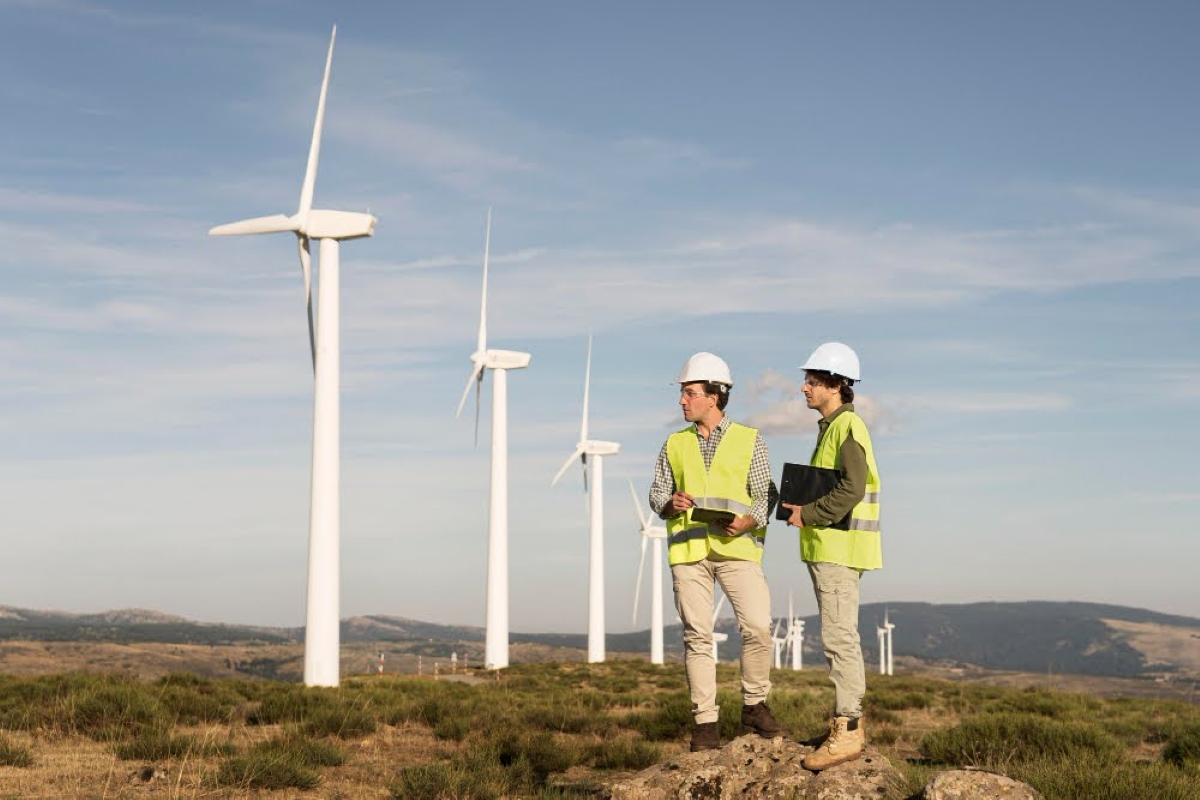
There's a certain allure to the remote job site: a wind farm rising from miles of open prairie. A pipeline cutting through terrain that hasn't changed in a century. A summer festival drawing thousands to a town with one traffic light.
But "remote" cuts both ways. The same distance that makes these locations ideal for operations also makes them dangerous when something goes wrong. Health professionals call these regions medical deserts, areas where hospitals are sparse, and specialists are practically nonexistent. Consider how many people don't have access to healthcare in these communities on a normal day; now add hundreds of workers to a job site that the local infrastructure was never built to support.
At the center of every remote-site emergency is a clock that doesn't care about your logistics. The Golden Hour - that first sixty minutes after a traumatic injury - is the window where rapid medical intervention makes the difference between recovery and tragedy. And the unfortunate reality is that for a remote worksite, such a window can close before help even gets dispatched.
For employers, this isn't simply a logistical hurdle to manage around. Because when it comes down to it, healthcare accessibility in rural areas lessens the exposure to human loss, legal liability, and operational disruption.
The Short-Term Crisis
The real weight of the problem hits when you picture it happening to a specific person, on a specific day, at one of your sites.
Let's say that a welder on a remote wind farm installation takes a fall at high elevation. The injury is severe: a compound fracture, possible internal bleeding. His crew calls 911 immediately, and they do everything right.
But "right" doesn't change geography. The nearest trauma center is two hours away. A medevac helicopter, if one is even available, still needs 30 to 40 minutes to arrive, land, load, and get airborne again. Meanwhile, the crew is standing by, watching the Golden Hour evaporate in real time.
This is what limited access to healthcare services actually looks like - not a policy gap on a spreadsheet, but an injured worker on a job site while help is still a dot on the horizon.
The Human Cost
Behind every delayed response is a person whose outcome just got worse. The physical toll is devastating on its own, but the ripple effects go further. There's the psychological trauma for the individual, for the coworkers who watched it happen, and for the families who get the phone call that starts with, "There's been an incident."
None of this is hypothetical. It happens every year, at worksites across the country, in communities where access to healthcare is the reason someone's life changed forever.
The "Hidden" Invoice: The Financial Toll of a Single Incident
For the decision-makers reading this - the safety directors and the project managers - there's a parallel reality playing out on the balance sheet.
What Can Limit Access to Health Care Services?
The barriers aren't always obvious. Geography is the most visible one, with miles of open road between a worksite and the nearest emergency room. But limited access is also driven by:
- Understaffed rural hospitals
- Volunteer emergency medical services (EMS) crews are stretched thin over several counties.
- A lack of specialized trauma care
- Remote areas not being built to support the volume of workers a large-scale project brings i.n
When these barriers accumulate, a treatable injury becomes life-threatening, and someone pays the price.
Medevac Bills
Air ambulance costs in the United States typically range from $20,000 to over $200,000 per flight, depending on distance, terrain, and the level of medical intervention required in transit. In rural or particularly remote areas, those numbers skew toward the higher end, with longer distances as well as more complex logistics.
And that's just the transport. It doesn't include the trauma center stay, the surgeries, the intensive care unit (ICU) time, or the rehabilitation that follows. A single serious incident at a remote worksite could generate a medical bill that climbs well into six or seven figures before the injured worker even leaves the hospital.
For employers, that exposure flows directly into workers' compensation premiums, insurance rate hikes, and potential out-of-pocket liability. These are costs that, unfortunately, linger for years after the incident itself.
Productivity Drain
The financial damage doesn't stop with the medical bill. When a serious injury occurs at a site with no on-site medical capability, the entire operation absorbs the shock. In many cases, work has to stop entirely because the Occupational Safety and Health Administration (OSHA) may require a full investigation before activity can resume.
Even before the regulatory process kicks in, disruption is immediate. For instance, a site supervisor who should be managing a crew is now coordinating a chaotic emergency response. Coworkers are pulled off tasks to assist, to give statements, and to process what just happened.
The cost of unplanned downtime on a large-scale construction or energy project can run tens of thousands of dollars per day. Multiply that by the days or weeks it takes to get back to full operations after a serious incident, and you're looking at a financial hit that dwarfs the original medical expense.
The Long-Term Fallout: When the Dust Settles, the Lawsuits Begin
The immediate crisis passes, and the injured worker is transported. The site reopens. The incident report gets filed. Then the real damage begins - slowly, quietly, and with compound interest.
Liability and the "Reasonable Care" Standard
When an injury occurs in a remote environment, and the outcome is severe, one of the first questions an attorney will ask is: What did the employer do to prepare for this? Not after the injury, but before it.
The legal concept of "reasonable care" requires employers to anticipate foreseeable risks and take appropriate steps to mitigate them. Operating a worksite in a location where healthcare access is limited is, by definition, a foreseeable risk. If an employer knew (or should have known) that emergency medical services were inadequate in that area and failed to provide an alternative, that becomes the centerpiece of a negligence claim.
And these aren't small claims, either. Catastrophic injury lawsuits in remote work settings routinely reach seven- and eight-figure settlements, particularly when the plaintiff can demonstrate that the employer had no on-site medical plan, no emergency action protocol, and no contingency for the exact type of incident that occurred. In this case, the absence of a plan becomes evidence in a court of law.
OSHA Recordables and the Bid You'll Never Win
Beyond litigation, a serious incident leaves a mark on your safety record that follows your company for years. OSHA-recordable injuries directly affect your Experience Modification Rate (EMR); this is the metric insurers use to calculate your workers' compensation premiums. A single severe incident could spike that rate significantly, meaning you'll pay more for coverage long after the injury itself has been resolved.
But the premium increase is only part of the story. In industries like energy, construction, and large-scale infrastructure, your EMR is one of the first things a general contractor or project owner reviews during the bidding process. A high rate signals risk, and in a competitive market, that signal can disqualify you from contracts worth far more than the cost of the incident that caused it.
Reputational Damage
Then there's the damage that doesn't show up on a financial statement but reshapes your business anyway. Can an event organizer secure permits after a preventable medical emergency made the local news? Can a construction firm recruit experienced tradespeople when word gets around that their remote sites have no medical support? It's not just a question for policymakers, but a question your future employees, clients, and partners are quietly asking about you.
In an era where clients increasingly require proof of robust emergency planning, reputation becomes gatekeeping. The companies that take healthcare accessibility seriously at their remote operations signal something powerful to the market: they value their people, they manage risk proactively, and they're worth doing business with.
How Can We Make Healthcare More Accessible? The MMC Model
So if the risks are this real and the costs are this high, the natural question becomes: how do employers improve access to healthcare at remote worksites where traditional infrastructure doesn't exist?
This is where Mobile Medical Corporation (MMC) operates, right in that gap between where your people work and where the nearest hospital is. With over 35 years of experience providing on-site medical services nationwide, we've built our entire operation around the premise that healthcare accessibility shouldn't depend on your zip code.
From data center builds and energy installations to large-scale public events and manufacturing facilities, MMC has spent decades deploying medical teams into the exact environments where traditional healthcare falls short.
Scalability Built for the Field
MMC doesn't offer a one-size-fits-all package. Our model scales to the operation, whether that looks like a single paramedic for a mid-size construction project or a rapid-response medical team for a multi-day sporting event.
Our team adapts to your industry, site, crew size, and specific risk profile of the work being done. No matter your specialty, MMC programs are tailored to fit your needs.
Qualified Personnel
MMC offers a wide range of medical professionals for your jobsite, including Advanced Cardiovascular Life Support (ACLS)-certified paramedics who can stabilize a crush injury, manage a cardiac event, and keep a patient stable until definitive care is reached. That's the difference between a medical emergency that spirals into a tragedy and a managed incident with a positive outcome.
Beyond emergency response, MMC also deploys personnel to support injury prevention and worker wellness, including:
When you choose MMC as your partner, you know you can count on qualified staff who are already on-site, equipped to turn the Golden Hour from a liability into a resource.
Protect Your Remote Workforce with Mobile Medical Corporation
For over 35 years, Mobile Medical Corporation has been answering the question that every remote operation eventually faces: how to improve access to healthcare in rural areas.
The right medical partner keeps your people safe, your EMR low, and your operations moving forward, no matter how far off the grid the job takes you. Get in touch with an MMC representative to learn how on-site medical services can protect your workforce and your bottom line.