
For decades, workplace first aid focused on a predictable set of emergencies: falls from scaffolding, lacerations on the production floor, sudden cardiac events in the office. Safety officers trained their teams to respond, then moved on. But the landscape of occupational health risk management has shifted dramatically, and the threats your workforce faces today look nothing like the ones that shaped traditional safety protocols.
The opioid crisis, driven by the explosive rise of synthetic opioids like fentanyl, has entered every workplace in America. Fentanyl is roughly 50 times more potent than heroin and 100 times stronger than morphine, and it's no longer confined to any single demographic or industry. Construction sites, manufacturing floors, warehouses, and corporate offices are all seeing the impact. Between accidental exposures and prescription misuse, recreational substances have turned overdose events into a legitimate workplace emergency - one that can unfold in minutes to claim a life before emergency medical services (EMS) arrive.
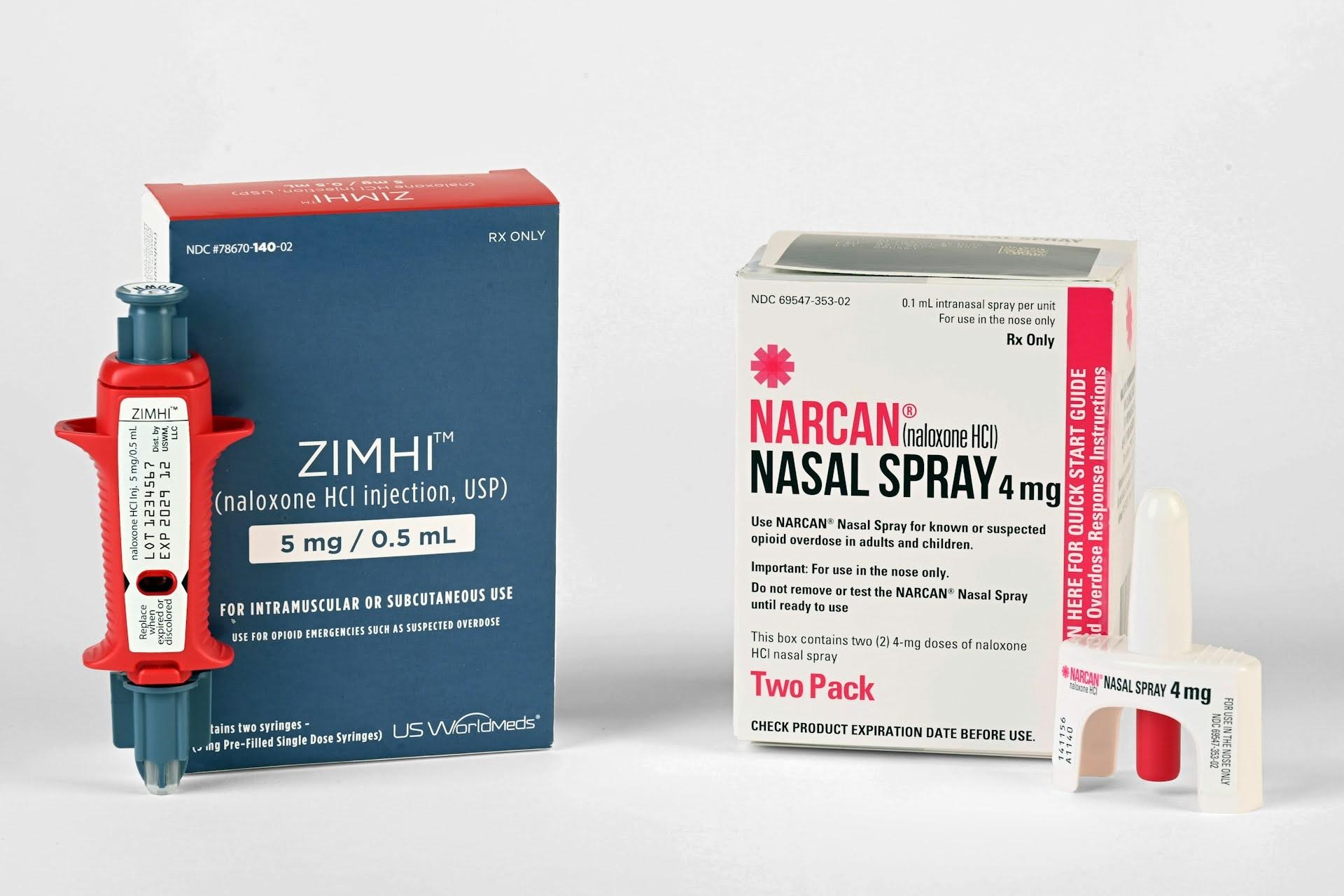
This is why workplace naloxone training is no longer a "nice to have" for forward-thinking employers. Including naloxone (Narcan) in your on-site medical response plan is a critical component of modern risk management.
The Fentanyl Factor: Why "It Won't Happen Here" is a Dangerous Myth
Every risk manager has heard some version of it: "Our people aren't that kind of workforce." It's a comforting thought, and it's also exactly the mindset that leaves companies unprepared when an emergency unfolds. Fentanyl doesn't care about your industry, your company culture, or your hiring standards.
Accidental Exposure Is a Real Workplace Hazard
You don't have to use a substance to be harmed by one. Employees in public-facing roles (i.e., security personnel or custodial teams) can encounter fentanyl residue on surfaces, in discarded items, or in packages.
First responders have been documenting accidental exposures for years; the same risks extend to any workforce that interacts with the public and manages shared environments. Whether in a breakroom or a loading dock, a single contaminated item could create an emergency no one saw coming.
Synthetic Opioids Work Faster Than EMS Can Respond
Here's the hard truth that shapes every serious conversation about fentanyl workplace safety: respiratory depression from synthetic opioids can begin within minutes of exposure. In many communities, the average EMS response time runs anywhere from 7 to 14 minutes - and on a sprawling construction site or in a rural logistics hub, that window might stretch considerably longer.
Brain damage from oxygen deprivation begins in 4 to 6 minutes. Without immediate intervention, waiting for professional responders often isn't a viable plan. Naloxone administered by a trained coworker in those first critical minutes is ultimately what determines the outcome.
High-Risk Industries (But No Industry Is Immune)
Certain sectors carry statistically higher exposure. Construction consistently ranks among the industries with the highest rates of opioid-related fatalities, driven by injury rates, physically demanding work, and prescription painkiller use following on-the-job injuries. Other work environments following a similar pattern include, but are not limited to:
- Logistics
- Warehousing
- Mining
- Manufacturing
But remember, no employer is exempt. Corporate offices, healthcare settings, hospitality venues, and education facilities have all reported overdose events on their premises.
Protecting Your Greatest Asset: The Business Case for Naloxone
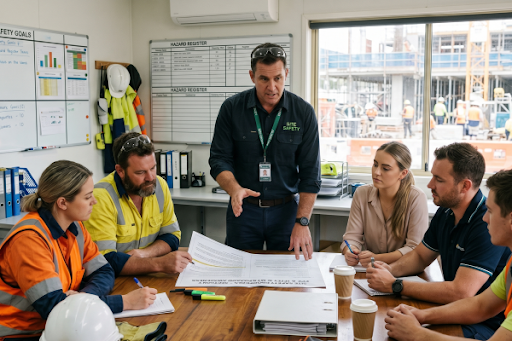
For HR directors and risk managers, safety investments have to clear a practical bar: do they protect the workforce and make business sense? Workplace naloxone training clears both with room to spare. Beyond the moral imperative of saving a life, there's a compelling operational argument that deserves a seat at the table.
Minimizing Liability and Managing the Ultimate Risk
The most expensive outcome any employer can face is a workplace fatality. The costs ripple outward in every direction, namely:
- Occupational Safety and Health Administration (OSHA) investigations
- Potential negligence claims
- Workers' compensation exposure
- Reputational damage
- Human toll on surviving coworkers and leadership
Occupational health risk management is fundamentally about reducing the severity of worst-case outcomes, and a preventable overdose death is about as severe as it gets.
Equipping your site with naloxone and training your team to use it is a definite, documentable step that steps beyond traditional strategy. It signals to regulators, insurers, and the workforce itself that your organization recognizes current threats while responding proactively.
In an era where "reasonable precaution" is increasingly measured against what's actually available, failing to stock naloxone is beginning to look less like neutrality and more like a gap in your safety program.
Employee Wellness, Morale, and a Culture of Care
Workforces pay close attention to what their employer is and isn't prepared for. When a company adds naloxone to its emergency response toolkit, it sends a message: we're ready for whatever happens, and we value you enough to be ready.
That message matters. Psychological safety (the sense that employees are genuinely protected and supported) is directly tied to retention, engagement, and the willingness of workers to report concerns before they escalate.
In industries facing tight labor markets or recruitment pressure, a visible commitment to modern safety standards is a differentiator. It also destigmatizes conversations about substance use and mental health, which makes it easier for employees to seek help before a crisis develops.
Productivity, Focus, and Operational Continuity
Every emergency on a jobsite disrupts operations. A serious incident without a trained response may halt production for days, trigger investigations, and create lingering trauma that affects team performance for weeks. Obviously, a fatality multiplies all of that.
When leadership knows the right protocols are in place - trained responders, accessible naloxone, a clear chain of action - they can focus on running the business instead of worrying about the emergency they can't control.
That peace of mind is what a mature safety program actually delivers. In this case, the goal isn't just to respond well when something happens; it's to build an environment where the entire organization concentrates on growth because the human safety net is already in place.
Overcoming the Stigma
One of the most persistent objections to workplace naloxone programs isn't budgetary or logistical - it's cultural. Leaders sometimes worry that stocking naloxone sends the wrong message, implies a problem that doesn't exist, or invites scrutiny the company would rather avoid.
Consider the automated external defibrillator (AED). Virtually every modern workplace of meaningful size has one mounted on the wall, clearly marked and ready for use. No one looks at that AED and assumes the company believes its workforce is unhealthy or at imminent risk of cardiac arrest. The device is there because sudden cardiac events can happen to anyone, anywhere, and the minutes before EMS arrive are the ones that determine survival.
Naloxone fits the same logic. Stocking it doesn't mean you think your workforce has a substance use problem. Rather, you've acknowledged the reality that opioid overdoses (accidental or otherwise) can happen to anyone, and the window for effective intervention is measured by minutes. In other words, a naloxone kit is a statement about your preparedness rather than your employees.
Reframing the conversation this way tends to dissolve discomfort quickly. The question isn't "what does it say about us if we have naloxone on-site?" The real question is "what does it say about us if we don't?"
Legal Protections
Another common hesitation involves liability concerns around administering naloxone. Here, the legal landscape strongly favors action over inaction. All 50 states have some form of Good Samaritan law, and the vast majority include specific provisions protecting individuals who administer naloxone in good faith during a suspected overdose. Many states also extend these protections explicitly to employers, trained responders, and organizations that stock and distribute the medication.
Naloxone itself is also remarkably safe from a clinical standpoint. It has no potential for abuse, no effect on someone who doesn't have opioids in their system, and a well-established safety profile that's led to its approval for over-the-counter sale in the US. Administering it to someone who turns out not to be experiencing an opioid overdose causes no harm.
The practical takeaway for Risk Managers is that the legal exposure of having naloxone and a trained workforce is minimal and well-protected. The legal exposure of not having it when an overdose occurs on company property? That's substantially greater.
Be that as it may, specific protections vary by state, so coordinating with a qualified on-site medical services provider like Mobile Medical Corporation guarantees your program is built on solid ground from day one.
Partnering for Implementation with MMC

Recognizing the need for workplace naloxone is the first step. Building a program that actually works - one that's properly stocked, consistently trained, legally sound, and integrated into your existing safety infrastructure - is where many organizations get stuck. This is where the right partner changes everything!
35+ Years of Adapting to Emerging Health Threats
Mobile Medical Corporation has spent more than three and a half decades building on-site medical services for industries that can't afford gaps in their safety coverage. Over that time, threats have evolved dramatically, from traditional trauma and cardiac response to bloodborne pathogen protocols.
An occupational health partner that has successfully adapted its programs through multiple emerging health challenges brings something a newer provider simply can't: the judgment that comes from having done this before, at scale, across many industries.
Customized Integration
Because naloxone doesn't live in isolation, MMC's services are quite literally built around that kind of integration. We'll work with you to develop a well-designed program that identifies:
- Where kits should be positioned for the fastest response
- Who needs to be trained at each location
- How the administration gets documented
- How the response connects to the EMS handoff
- Post-incident follow-up
Training That Builds Confidence
The best-stocked kit in the world is useless if the people near it freeze when the moment comes. Effective workplace naloxone training has to build genuine confidence in responders who may never have faced a medical emergency before. That means hands-on practice, realistic scenario work, and ongoing refresher training to keep skills sharp.
It also means addressing the emotional weight of the situation: what it feels like to respond, as well as how to manage the scene. Mobile Medical Corporation's training programs are designed around that human reality, because confidence under pressure is what actually saves lives.
Scalable From a Single Site to a National Footprint
Workforce safety needs don't come in one size! A single corporate office has fundamentally different requirements than a 500-worker construction site.
Our on-site medical services scale accordingly, from a single location with focused training to enterprise-wide rollouts coordinated across dozens of sites. Whether you're responsible for one facility or managing a national footprint, the program adapts to your operational reality rather than forcing you to adapt to a rigid service model.
Strengthen Your Safety Program with MMC
Don't wait for an incident to realize your first aid kit is outdated. In the time it took to read this post, a life somewhere was saved by an intervention administered by a trained bystander. That bystander could be on your team, one of your employees.
Mobile Medical Corporation has spent more than 35 years helping organizations build health risk management programs that meet the demands of the modern workplace. Contact us today to audit your medical resources and bring workplace naloxone training to your team!